
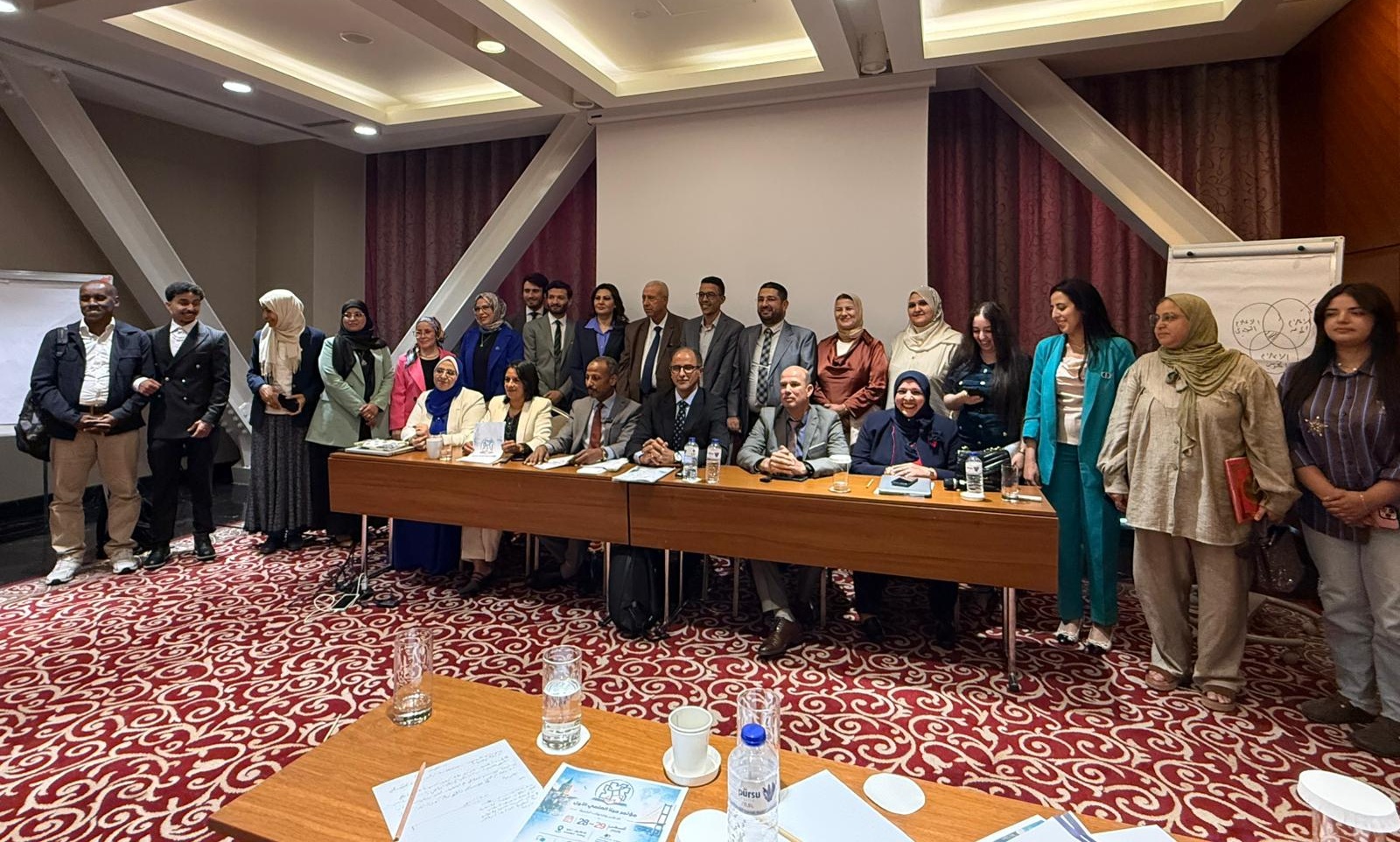
The First MENA Scientific Conference on Media and Digital Transformations concluded in Istanbul after two days of academic sessions and professional discussions exploring the future of media amid rapid developments in artificial intelligence, legal regulation, digital verification, and social responsibility.
Held on 28–29 August 2026, the conference took place under the theme:
“Media at the Intersection of Legal Regulation, Artificial Intelligence, and Social Responsibility”
The conference was organized by MENA Network, in cooperation with Istanbul University-Cerrahpaşa, Sidi Mohamed Ben Abdellah University in Fez, Morocco, and the Afro-Mediterranean Centre for Strategic, Legal, and Social Studies.
Broad Academic and Professional Participation
The conference brought together researchers, academics, journalists, and experts from approximately 25 countries. Across six academic sessions, participants presented and discussed 52 research papers examining the transformations affecting the media sector from legal, technological, ethical, and professional perspectives.
By bringing university professors and researchers together with journalists, trainers, and specialists in digital media, artificial intelligence, law, and institutional communication, the conference successfully bridged academic knowledge and professional media practice.
Discussions emphasised that media development can no longer be limited to adopting modern technologies. It requires an integrated framework encompassing legislation, training, professional ethics, data protection, and stronger public trust in media institutions.
Key Issues Discussed at the Conference
The conference papers and discussions addressed a range of key issues, including:
- The impact of artificial intelligence on news production, editing, and distribution.
- Legal challenges associated with the use of emerging technologies within media organisations.
- Professional and ethical responsibilities when employing artificial intelligence tools.
- The spread of disinformation, synthetic content, and deepfakes.
- The future of digital journalism amid changes in platforms and algorithms.
- The protection of privacy, personal data, and intellectual property rights.
- Updating media education and training curricula to keep pace with digital transformation.
- The role of media in raising awareness, serving society, and protecting the public’s right to know.
- Strengthening cooperation among universities, media organizations, research centers, and training institutions.
- Preserving the human and social role of journalism in the digital environment.
Conference Outcomes
The conference concluded that artificial intelligence should be treated as a tool for supporting and advancing journalism. It stressed, however, that editorial responsibility must remain with journalists and media organizations and that emerging technologies should never replace professional judgement or human verification.
Participants also underlined the importance of establishing clear regulatory and ethical frameworks for the use of artificial intelligence in media. Such frameworks should promote transparency, protect privacy and intellectual property rights, and reduce bias, disinformation, and content manipulation.
The conference further emphasized the need to expand partnerships between academic and media institutions so that research findings can be translated into training resources, editorial policies, and practical newsroom procedures.
The conference produced the following key outcomes:
- Establishing a continuous academic and professional platform to examine digital transformations and their impact on Arab and international media.
- Developing professional and ethical guidelines for the use of artificial intelligence in media organizations.
- Expanding specialized training programs in digital verification, synthetic-content detection, information security, and source protection.
- Supporting joint research initiatives among universities, media organizations, and research centers in participating countries.
- Creating an academic and professional network connecting the researchers, experts, and journalists who participated in the conference.
- Encouraging media organizations to adopt publicly available policies explaining how artificial intelligence is used in content production.
- Supporting comparative studies on media legislation and the regulation of digital platforms and artificial intelligence across Arab and African countries.
- Transforming outstanding research papers into educational and training materials for journalists and media students.
- Expanding opportunities for young people and emerging researchers to present their projects and experiences at future editions.
- Working towards holding the conference regularly as a permanent platform for dialogue among journalists, academics, and policymakers.
Recommendations for the Responsible Use of Artificial Intelligence
Participants recommended that media organisations should not use artificial intelligence tools without clear human oversight, particularly when reporting on conflicts, elections, security issues, human rights, health, and other highly sensitive areas.
They also called for disclosure whenever artificial intelligence plays a substantial role in producing written, photographic, or audiovisual content. Media organisations were encouraged to establish internal review mechanisms before publication and to avoid treating automated tools as independent sources of information.
The recommendations further highlighted the importance of protecting employment opportunities within media organisations and directing technology towards assisting journalists with research, analysis, translation, and data processing—not replacing journalistic expertise or diminishing the value of professional media work.
Strengthening Partnerships Between Media and Academia
The conference demonstrated the importance of building sustainable partnerships between media organisations and universities. Such cooperation allows newsrooms to benefit from academic research while enabling universities to better understand the practical challenges journalists face in the field.
Participants agreed that bridging the gap between academic study and professional practice is essential to preparing a new generation of journalists capable of using technology effectively, ethically, and responsibly.
The cooperation between MENA Network and its academic partners reflected this approach by bringing researchers and media practitioners together and facilitating the exchange of expertise among participants from diverse countries and professional backgrounds.
A Platform for International Dialogue and Cooperation
The significance of the conference extended beyond the research papers presented. It also helped establish new relationships among participants and organising institutions and opened discussions on future initiatives involving training, research, academic publishing, expert exchanges, and joint events.
The geographical and professional diversity of participants enriched the discussions and highlighted both similarities and differences among media environments, particularly regarding legislation, technological development, press freedom, and the readiness of media organisations to adopt artificial intelligence responsibly.
Post-Conference Action
In coordination with its partners, MENA Network is working to follow up on the conference outcomes and translate them into practical initiatives. These include publishing the recommendations and selected research papers, launching training and research activities related to the conference themes, and developing communication channels connecting participating researchers and media professionals.
The Network also intends to build on the results of the inaugural edition and broaden participation in future conferences, strengthening the event’s position as an international platform for dialogue on the future of media and digital transformation.
MENA Network affirmed that the conference marks the beginning of a long-term academic and professional process rather than a one-off event. The real value of its outcomes, the Network noted, will be realised by turning discussions and recommendations into practical initiatives within universities and media organisations.
At the conference’s conclusion, MENA Network expressed its appreciation to the partner universities and institutions, researchers, academics, media professionals, and members of the scientific and organising committees. It reaffirmed its commitment to advancing professional and responsible media that benefits from technology while safeguarding people, truth, and the public interest.