
BAKR IBRAHIMOGLU
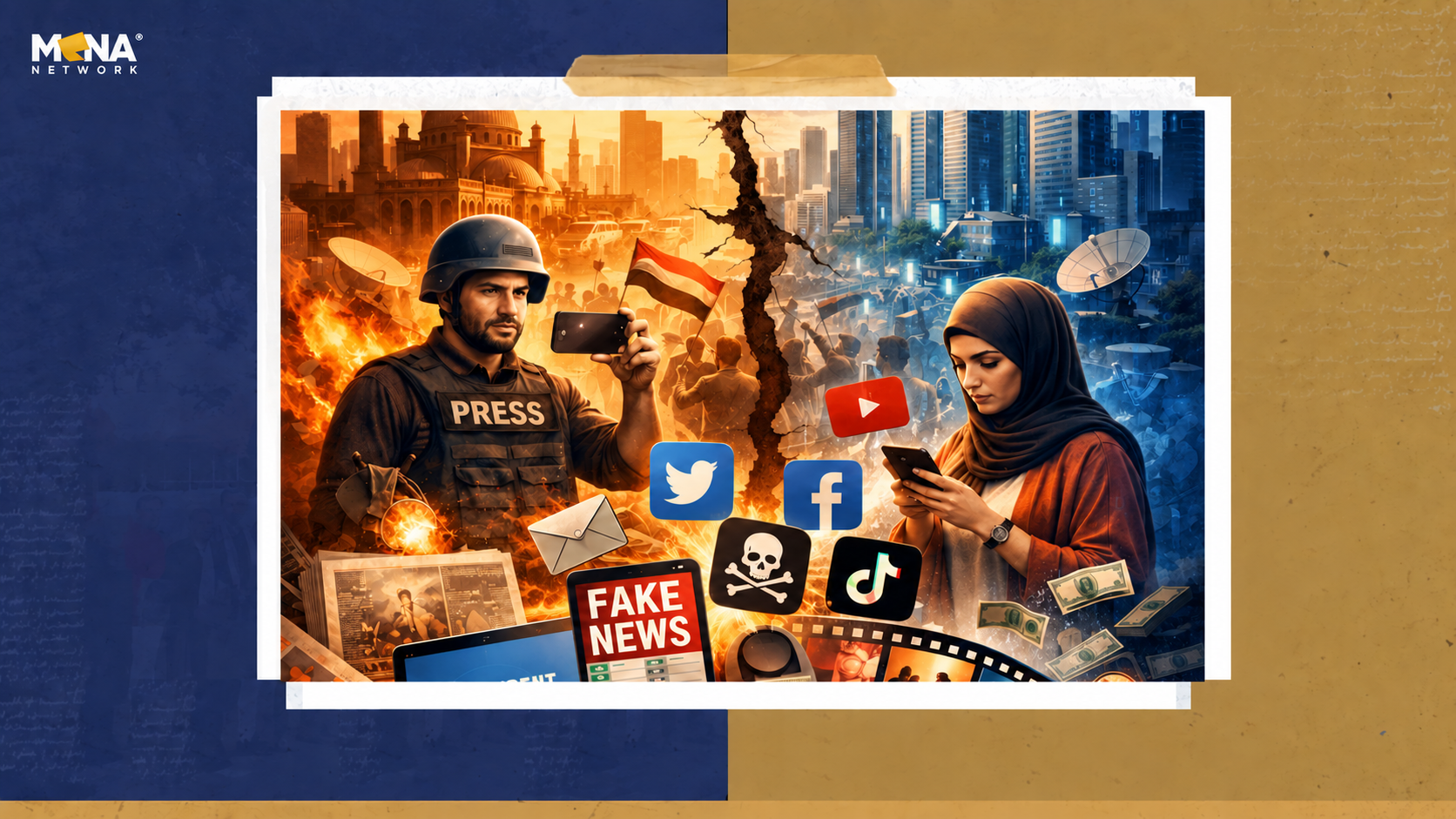
The massive expansion of digital platforms across the Middle East and North Africa has triggered what can only be described as an earthquake shaking the foundations of the traditional media landscape. After decades of dominance by large state-run and private media institutions, the digital revolution broke this monopoly, gave voice to the voiceless, and opened new spaces for debate and expression.
This wave has democratized access to information in unprecedented ways. Yet at the same time, it has opened the door to complex challenges that threaten content quality, credibility, and even the sustainability of professional journalism itself.
1. The End of Gatekeeping and the Rise of New Actors
One of the most visible consequences of digital transformation has been the erosion of the traditional “gatekeeper” role long played by established media institutions. Governments and major media corporations are no longer able to fully control the flow of information.
The Rise of Independent Journalists and Citizen Reporters
Platforms such as X (formerly Twitter), Facebook, and YouTube have empowered independent journalists, activists, and ordinary citizens to publish news, analysis, and live testimonies directly from the heart of unfolding events. During the Arab Spring and subsequent social movements, these new actors became primary sources of information, often bypassing official media blackouts.
The Emergence of Digital-Native Media
A wave of independent, digital-born news platforms has emerged, including Mada Masr, Aljumhuriya.net, and Daraj Media. These outlets rely on flexible business models and lower operational costs, focusing on investigative and in-depth analytical journalism tailored to specialized audiences. Their ability to reach readers directly online has allowed them to carve out distinct spaces within the media ecosystem.
2. Explosive Digital Growth: The Numbers Behind the Shift
To grasp the depth of this transformation, one must look at the data defining the region’s new digital reality.
Widespread Connectivity
As of July 2024, social media users worldwide reached 5.17 billion people—63.7% of the global population. In several Middle Eastern countries, internet penetration exceeds 90%.
Record Screen Time
The transformation is not only about user numbers but also intensity of use. The average user in the Middle East spends approximately 3.5 hours per day on social media platforms—among the highest rates globally. For large segments of society, particularly youth, these platforms have become the primary source of news and information.
This growth has created a vast and highly engaged digital audience. However, it has also turned the public sphere into an intensely competitive arena where value is not necessarily measured by quality, but by the ability to capture attention.
3. The Dominance of Superficial Content: The Attention Economy
In this highly competitive environment, the rules of the game have changed. Platform algorithms have effectively become the new editors-in-chief, designed to favor content that generates maximum engagement—likes, shares, and comments—in the shortest possible time.
The Rise of Fast Content
Short, visually stimulating content—such as TikTok videos and Instagram Reels—has come to dominate. News is compressed into rapid formats, and analysis is reduced to provocative headlines, leading to a flattening of public discourse.
The Race for “Trending”
Chasing trends has become a priority for many content creators and media institutions alike. This relentless competition often sacrifices depth and accuracy in favor of speed and virality, weakening the true informational value of journalism.
The Decline of Long-Form Journalism
In an environment that rewards quick consumption, investigative reporting and in-depth analysis—both of which require time, resources, and audience patience—struggle to survive, particularly outside elite circles.
4. Fake News and Piracy: Two Faces of the Same Crisis
Digital transformation has brought opportunities, but it has also introduced systemic threats to the entire media ecosystem.
The Epidemic of Misinformation
The ease of producing and distributing unverified content has turned digital spaces into fertile ground for fake news and disinformation. This phenomenon is frequently weaponized in political conflicts, fueling polarization and eroding public trust—not only in media institutions, but in institutions at large.
Piracy and Economic Drain
On another front, media organizations face an existential economic challenge: piracy. Studies indicate that more than 60% of online video consumption in the Middle East occurs through unauthorized platforms. As a result, institutions investing millions in producing high-quality content—films, series, and programs—are deprived of advertising and subscription revenues, weakening their capacity to sustain operations and reinvest in future production.
Toward a New Digital Social Contract
Digital transformation in the Middle East is not merely a technological shift; it is a profound reconfiguration of power, knowledge, and society. While it has empowered individuals with unprecedented tools for expression and participation, it has also placed professional journalism before existential challenges.
Addressing this dilemma requires a collective effort:
- Media institutions must innovate in business models, invest in quality journalism that algorithms cannot replicate, and build direct trust-based relationships with audiences.
- Digital platforms must assume social responsibility in combating misinformation and redesign algorithms that reward credible, substantive content.
- Audiences must develop media and digital literacy skills to distinguish between trustworthy and false information, and actively support independent journalism—both financially and morally.
The future of media in the region depends on our ability to transform digital chaos into a pluralistic, responsible knowledge space.